

The Peter Munk Cardiac Centre (PMCC) is a world leader in the diagnosis, care and treatment of both simple and complex cardiac and vascular disease.
VISION
Transform the future of cardiac and vascular care for patients across Canada and around the world by integrating excellence in clinical care, research, innovation and teaching.
VALUES
Personalize clinical decision-making, enable research and discovery science, and improve health system operational efficiency through AI
MISSION
AI scientists that partner with data engineers and clinician-researchers to apply machine learning approaches to address three main areas of focus
a) improve the efficiency of hospital operations
b) develop precise treatment options for individual patients
c) identify novel relationships in large data sets that lead to new advances in clinical care
Team

Dr. Barry Rubin
Executive Lead
Dr. Chris McIntosh
Lead AI Scientist & Senior Scientist
Dr. Heather Ross
Clinician Investigator
Joe Duhamel
Data Architect
Mary Beth Carpenter
IT Lead
Dr. Vallijah Subasri
Staff Scientist III - AI
Dr. Ahmadreza Attarpour
Staff Scientist I - AI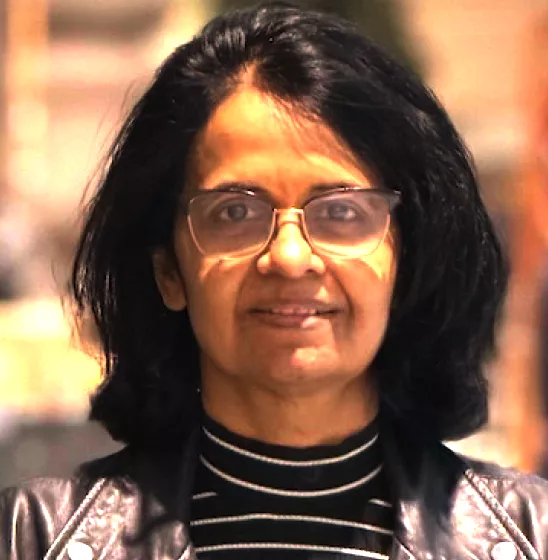
Dr. Shakun Baichoo
Bioinformatics/ Data Science Lead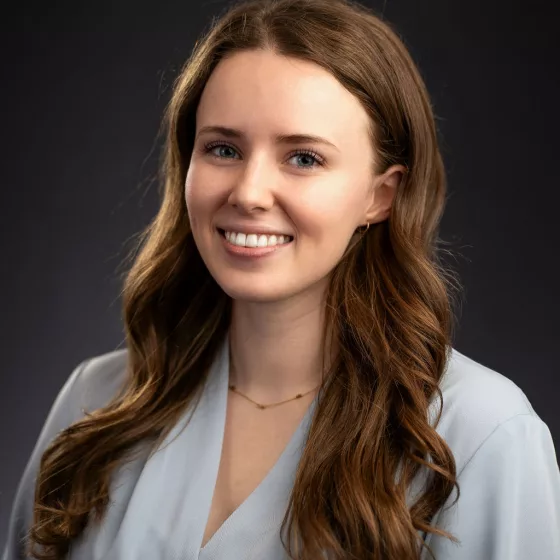
Briana Layard, RN
Clinical Lead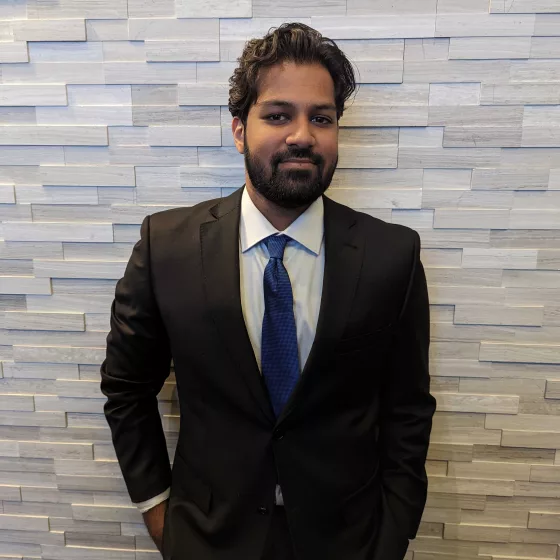
Neil Punwasi
Bioinformatics Analyst
Dr. Ali Abedi
Machine Learning Engineer
Aneta Chmielewski
Program Manager
Tony Han
Software Developer
Hongwei Lyu
Software Developer
Ching-Yuan Yu
Machine Learning Engineer
Siham Amara-Belgadi
PhD Student McIntosh ML Lab
William Gao
PhD Student McIntosh ML Lab
Balagopal Unnikrishnan
PhD Student McIntosh ML Lab
Sangwook Kim
PhD Student McIntosh ML Lab
Zeinab Navidi
Research Student
Kaden Mckeen
ML Researcher
Mica Consens
Research Student
Sejin Kim
PhD Student McIntosh ML Lab
Vivian Chu
PhD Student
Bonnie Chao
Research Student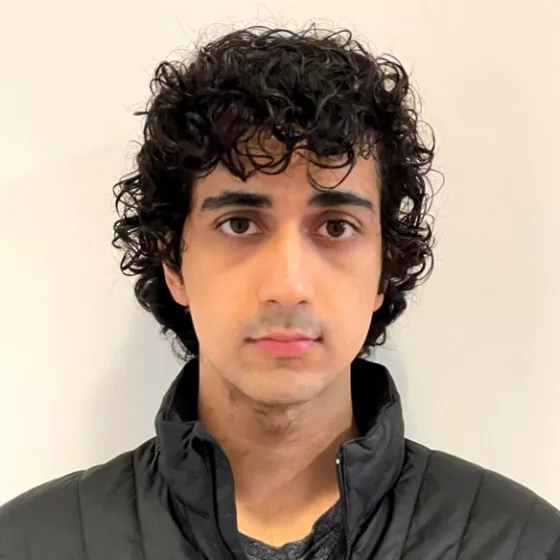
Bhavish Verma
PhD Student McIntosh ML Lab
Emmy Fang
Research Student
Max You
PhD Student McIntosh ML Lab
Elly Zhou
PhD Student
Purav Gupta
Research Student
Niousha Sadjadi
Research Student
Sumin Kim
Phd Student
Hugo Paulat
Research Student
Neel Sarkar
Research Student
Charles Chen
Research Student
Daphne Baron
Research Student
Amirfaham Fallahpour
Research Student
Aly Khalifa
McIntosh ML Lab
Jun Ma

Laura Oliva

Haotian Cui

Rex Ma

Adamo Young
Research Student
Phil Fradkin

Cathy Ongly
McIntosh ML Lab
Hassaan Maan

Ronald Xie
Research Student
Chloe Wang
Research Student, PhD
Duncan Forster
Research Student
Emily So
Research Student
Kathrine Bhargava
Research Student, MSc
John Giorgi
Research Student
Lin Zhang
Research Student
Nasim Abdollahi
Post-doctoral Fellow
Oleksii Tsepa
Research Student, MSc
Paola Driza
Researcher Student, MSc
Rashmi Nedadur
Researcher
Roman Burakov
Research Student, BScFeatured Publications
The PMCC AI Team have led or collaborated on many projects, listed here are some of the projects that have published in peer reviewed journals.
Select an article title to read it in full.

Remote monitoring of heart failure exacerbations using a smartwatch
Gao, Y., Moayedi, Y., Foroutan, F. et al. Remote monitoring of heart failure exacerbations using a smartwatch. Nat Med 32, 924–933 (2026). https://doi.org/10.1038/s41591-026-04247-3

scGPT: toward building a foundation model for single-cell multi-omics using generative AI
Cui, H., Wang, C., Maan, H. et al. scGPT: toward building a foundation model for single-cell multi-omics using generative AI. Nat Methods 21, 1470–1480 (2024). https://doi.org/10.1038/s41592-024-02201-0

Towards foundation models of biological image segmentation
Ma, J., Wang, B. Towards foundation models of biological image segmentation. Nat Methods 20, 953–955 (2023). https://doi.org/10.1038/s41592-023-01885-0

Tandem mass spectrum prediction for small molecules using graph transformers
Young, A., Röst, H. & Wang, B. Tandem mass spectrum prediction for small molecules using graph transformers. Nat Mach Intell 6, 404–416 (2024). https://doi.org/10.1038/s42256-024-00816-8.

Sage AT, Donahoe LL, Shamandy AA, Mousavi SH, Chao BT, Zhou X, Valero J, Balachandran S, Ali A, Martinu T, Tomlinson G, Del Sorbo L, Yeung JC, Liu M, Cypel M, Wang B, Keshavjee S. A machine-learning approach to human ex vivo lung perfusion predicts transplantation outcomes and promotes organ utilization. Nat Commun. 2023 Aug 9;14(1):4810. doi: 10.1038/s41467-023-40468-7. PMID: 37558674; PMCID: PMC10412608.

Generative AI could revolutionize health care — but not if control is ceded to big tech
Toma A, Senkaiahliyan S, Lawler PR, Rubin B, Wang B. Generative AI could revolutionize health care – but not if control is ceded to big tech. Nature 624, 36-38 (2023). doi: https://doi.org/10.1038/d41586-023-03803-y.

Segment anything in medical images
Ma, J., He, Y., Li, F. et al. Segment anything in medical images. Nat Commun 15, 654 (2024). https://doi.org/10.1038/s41467-024-44824-z

Ong Ly, C., Unnikrishnan, B., Tadic, T. et al. Shortcut learning in medical AI hinders generalization: method for estimating AI model generalization without external data. npj Digit. Med. 7, 124 (2024). https://doi.org/10.1038/s41746-024-01118-4.

Detecting and Remediating Harmful Data Shifts for the Responsible Deployment of Clinical AI Models
Subasri VKrishnan AKore A, et al. Detecting and Remediating Harmful Data Shifts for the Responsible Deployment of Clinical AI Models. JAMA Netw Open. 2025;8(6):e2513685. doi:10.1001/jamanetworkopen.2025.13685

Personalized survival benefit estimation from living donor liver transplantation with a novel machine learning method for confounding adjustment
Gangadhar, A., Hasjim, B. J., Zhao, X., Sun, Y., Chon, J., Sidhu, A., Jaeckel, E., Selzner, N., Cattral, M. S., Sayed, B. A., Brudno, M., McIntosh, C., & Bhat, M. (2025). Personalized survival benefit estimation from living donor liver transplantation with a novel machine learning method for confounding adjustment. Journal of hepatology, 83(5), 1116–1127. https://doi.org/10.1016/j.jhep.2025.04.040

Multi-omic landscape of EVs in Human Atherosclerotic Plaques BIONIC: biological network integration using convolutions
Raju, S., Turner, M. E., Cao, C., Abdul-Samad, M., Punwasi, N., Blaser, M. C., Cahalane, R. M. E., Botts, S. R., Prajapati, K., Patel, S., Wu, R., Gustafson, D., Galant, N. J., Fiddes, L., Chemaly, M., Hedin, U., Matic, L., Seidman, M. A., Subasri, V., Singh, S. A., … Howe, K. L. (2025). Multiomic Landscape of Extracellular Vesicles in Human Carotid Atherosclerotic Plaque Reveals Endothelial Communication Networks. Arteriosclerosis, thrombosis, and vascular biology, 45(7), 1277–1305. https://doi.org/10.1161/ATVBAHA.124.322324

Incremental value of machine learning for risk prediction in tetralogy of Fallot
Ishikita, A., McIntosh, C., Roche, S. L., Barron, D. J., Oechslin, E., Benson, L., Nair, K., Lee, M. M., Gritti, M. N., Hanneman, K., Karur, G. R., & Wald, R. M. (2024). Incremental value of machine learning for risk prediction in tetralogy of Fallot. Heart (British Cardiac Society), 110(8), 560–568. https://doi.org/10.1136/heartjnl-2023-323296

Moving towards genome-wide data integration for patient stratification with Integrate Any Omics
Ma, S., Zeng, A.G.X., Haibe-Kains, B. et al. Moving towards genome-wide data integration for patient stratification with Integrate Any Omics. Nat Mach Intell 7, 29–42 (2025). https://doi.org/10.1038/s42256-024-00942-3

Machine learning identifies arrhythmogenic features of QRS fragmentation in human cardiomyopathy: Implications for improving risk stratification
Ly, C. O., Suszko, A. M., Denham, N. C., Chakraborty, P., Rahimi, M., McIntosh, C., & Chauhan, V. S. (2025). Machine learning identifies arrhythmogenic features of QRS fragmentation in human cardiomyopathy: Implications for improving risk stratification. Heart rhythm, 22(10), 2457–2468. https://doi.org/10.1016/j.hrthm.2024.11.002
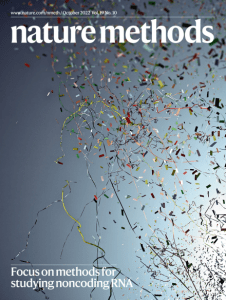
BIONIC: biological network integration using convolutions
Duncan T. Forster, Sheena C. Li, Yoko Yashiroda, Mami Yoshimura, Zhijian Li, Luis Alberto Vega Isuhuaylas, Kaori Itto-Nakama, Daisuke Yamanaka, Yoshikazu Ohya, Hiroyuki Osada, Bo Wang, Gary D. Bader & Charles Boone. Nat Methods 19, 1250–1261 (2022).
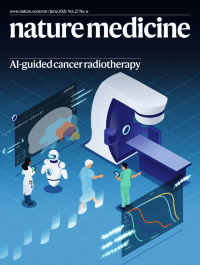
AI-guided Prospective Cancer Radiotherapy
Chris McIntosh, Leigh Conroy, Michael C. Tjong, Tim Craig, Andrew Bayley, Charles Catton, Mary Gospodarowicz, Joelle Helou, Naghmeh Isfahanian, Vickie Kong, Tony Lam, Srinivas Raman, Padraig Warde, Peter Chung, Alejandro Berlin & Thomas G. Purdie. Nat Med 27, 999–1005 (2021).
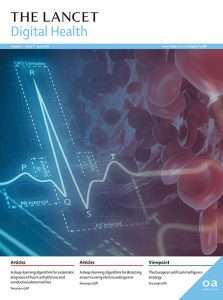
Development of a deep learning algorithm to predict long-term cardiovascular complications post liver transplantation
Osvald Nitski, BASc, Amirhossein Azhie, MD, Fakhar Ali Qazi-Arisar, MD, Xueqi Wang, BSc, Shihao Ma, BASc, Leslie Lilly, MD, Kymberly D Watt, MD, Josh Levitsky, MD, Sumeet K Asrani, MD, Douglas S Lee, MD, Barry B Rubin, MD, Mamatha Bhat, MD, Bo Wang, PhD. The Lancet Digital Health, Volume 3, Issue 5, e295 – e305
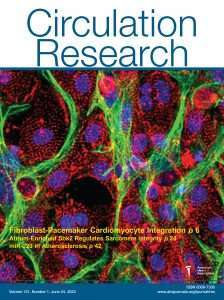
Paralleling the Expressed Genomic Diversity in Host Response in Sepsis to Myocardial Infarction
Augustin Toma, Claudia dos Santos, Beata Burzyńska, Monika Góra, Marek Kiliszek, Natalie Stickle, Holger Kirsten, Leah B. Kosyakovsky, Bo Wang, Sean van Diepen, Slava Epelman, Yishay Szekely, John C. Marshall, Filio Billia, and Patrick R. Lawler. The Lancet Digital Health, Volume 3, Issue 5, e295 – e305
Get in Touch
Work with Us
Our Collaborators


